
Weaving a log cabin scarf on a rigid heddle loom

Updated: Feb 17
The Log cabin pattern is a striking geometric weaving design which when woven with two contrasting colours of yarn looks stunning. The pattern of bold clean lines looks more complex that it actually is with the weaving being just plain weave. In this blog we outline a project to weave a navy and white log cabin scarf including the threading plan and weaving instructions.

What is a log cabin weave?
The name 'log cabin' comes from the resemblance of the pattern to the logs used in the construction of log cabins. Log cabin is a colour and weave effect with the design created by alternating the colours in a specific order in both the warp and the weft. The pattern can be adapted to different sizes and proportions, making it a versatile design for various projects.
To create the design the weaver alternates between the two colours of yarn, weaving a set number of rows for each colour to achieve the desired log height. This creates blocks that appear to shift in direction, almost like a checkerboard that play tricks on the eye. The beauty of a log cabin design is that it requires no extra heddles and no pick up sticks because it is just plain weave.

Materials used to weave a log cabin design scarf:
8epi heddle for use with the double knit wool
Yarn: DK British wool in two contrasting colours. We chose a solid navy and white yarn
Shuttles: 2 shuttles, one for each colour of yarn
Warping to create a Log cabin scarf on a rigid heddle weaving loom
When weaving a log cabin scarf on a rigid heddle loom the effect comes from alternating colours in the warp and weft with areas where a particular colour is threaded as two consecutive threads. To warp the loom you need to alternate each colour yarn in the slots and then wind the warp onto the back beam. If you would like to watch a tutorial on the direct warping of a TabbyandTweed rigid heddle loom them you can see the tutorial here: Video - warping a TabbyandTweed rigid heddle weaving loom.
This image below shows the warped loom with the warp now wound onto the back beam. You can see that each slot has two threads of one colour with the colours alternated across the heddle.

The log cabin threading plan
A log cabin threading plan is shown below. You can see here that the two coloured yarns alternate until thread 8 and 9 when there are two dark blue threads. This 16 pattern is repeated across the warp so threads 16 and then 1 are two light blue threads.

The width of the 'logs' can be changed so for example, if you wanted the design to be smaller you might have threads 4 and 5 being dark blue with the light blue repeat being threads 8 and then 1.
Threading the heddle to achieve the log cabin threading plan
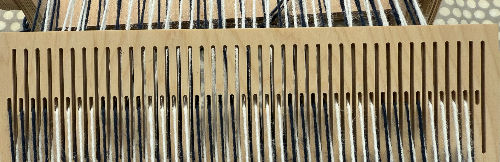
This is perhaps the trickiest part (although it isn't beyond even a new weaver). The images below show the threads through the slots and the holes. You can see that the two different coloured yarns swap from being in the slots to the holes every 4 threads.
In this image you can see the warp threads in the slots across the heddle

In this image you can see the warp threads in the holes across the heddle
Weaving a log cabin design
Once you have warped your loom and threaded the heddles you can start to weave. The weaving pattern using the two yarn colours replicates the order of the coloured threads in the warp. So, for the threading pattern shown above the weaving pattern would be as detailed here with the 16 rows repeated throughout the weaving project.
Row 1: Weave a navy row
Row 2: Weave a white row
Row 3: Weave a navy row
Row 4: Weave a white row
Row 5: Weave a navy row
Row 6: Weave a white row
Row 7: Weave a navy row
Row 8: Weave a white row
Row 9: Weave a white row
Row 10: Weave a navy row
Row 11: Weave a white row
Row 12: Weave a navy row
Row 13: Weave a white row
Row 14: Weave a navy row
Row 15: Weave a white row
Row 16: Weave a navy row
Weaving a balanced weave
In order to achieve the log cabin design it is important that your weaving is balanced. What we mean by balanced is that in every square area of weaving there are the same number of warp and weft threads. Balanced weaving ensures that both the warp and the weft threads are equally visible in the final woven fabric which is essential for this design to be evident. Beating down to achieve a balanced weave is necessary. If you beat too gently then the fabric will become warp faced and too aggressively and the weave will become weft faced.

Log cabin variations to try:
You don't just need to stick to two colours and the scarf shown below has been woven with a blue and a number of different pink yarns.

Final Thoughts
Weaving a log cabin design on a rigid heddle weaving loom is a fantastic way to explore colour and weave effects. It is a versatile design which actually looks more advanced that the process actually is. With just two yarns and plain weave you can create a scarf that looks both striking and beautiful.

Weaving Kits including two log cabin scarf kits are available in our TabbyandTweed website shop for UK, Canada and USA delivery and our TabbyandTweed Etsy shop for delivery elsewhere.

Interested in learning to weave? Then our workshop page has all the details found by clicking the link here.
If you are interested in keeping up to date with our weaving work then do sign up to receive our newsletter by clicking the link here.


