
A Beginner's Guide to weaving on an inkle loom including a Free Pattern

Inkle weaving is a method of making narrow woven bands using a small, table-top loom called an inkle loom. The technique uses a fixed warp wound around pegs, with threads alternating between heddled and unheddled positions; raising and lowering these creates a gap, or shed, through which a weft thread is passed back and forth to build the band. It is commonly used to make straps, belts, trims, and similar narrow textiles. This guide explains the basics and includes a simple pattern you can use to weave your first band.
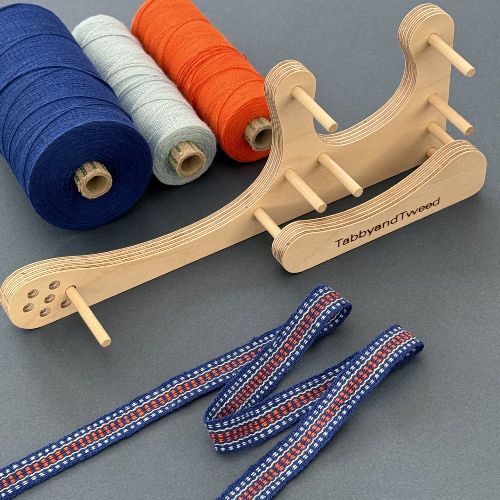
What Is Inkle Loom Weaving?
Inkle weaving is an ancient technique used to create narrow woven bands: bookmarks, braids, bag straps, hair ties, and decorative ribbons. Inkle weaving is a warp-faced technique, which means the pattern comes entirely from the arrangement of the warp threads - the threads stretched across the loom - rather than from the weft (the thread you weave across). The inkle loom holds your warp threads under tension so you can weave with both hands free, building up beautiful warp-faced patterns row by row. It’s rhythmic, satisfying, and endlessly portable.

Unlike a full-size floor loom, it's compact enough to sit on a table or on your knee and doesn't need a dedicated space, so it can be set up and used in short sessions.

The warp is wound continuously around the loom's pegs in a fixed pattern, with threads alternating between heddled and unheddled.
Why People Take Up Inkle Weaving
People often take up inkle weaving because it requires relatively little equipment and can be learned without prior weaving experience. The repetitive motion of weaving is similar to other handcrafts like knitting, and many people find it a relaxing activity. A finished band can usually be completed within a few hours, which makes it a practical project for beginners.
The woven bands produced are also functional: they can be used as straps, belts, lanyards, or trim, rather than purely decorative items.
Our travel size inkle loom weaving kit includes everything you need to start weaving including the loom, yarn, instructions and travel bag to take your project with you. The kit includes the following:
An fully assembled inkle loom - 28cm long x 11cm high x 5cm deep
50m of each of three colours of strong 4 ply cotton yarn
Heddle thread - a smooth, strong cotton cord for making heddles
Instruction booklet
A wooden shuttle
2 front pegs (one is a spare)
Project carry bag

For those new to weaving on an inkle loom we have also created a video Tutorial to help you get started: Click here to watch the Inkle Loom Weaving Tutorial.
A Simple Inkle Loom Weaving Pattern
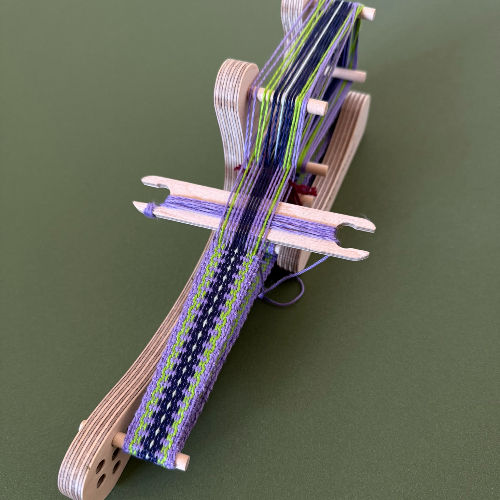
You will need:
An inkle loom
4 colours of yarn – we used 4 ply cotton
A shuttle
This pattern uses 29 warp threads in total. Thread the loom in the order shown below, from left to right. 'Over' means the thread goes over the top peg and has a heddle put over it. ‘Under' means it is a free thread which goes under the top peg
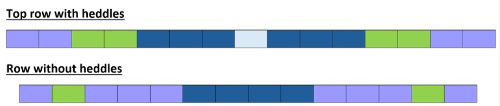
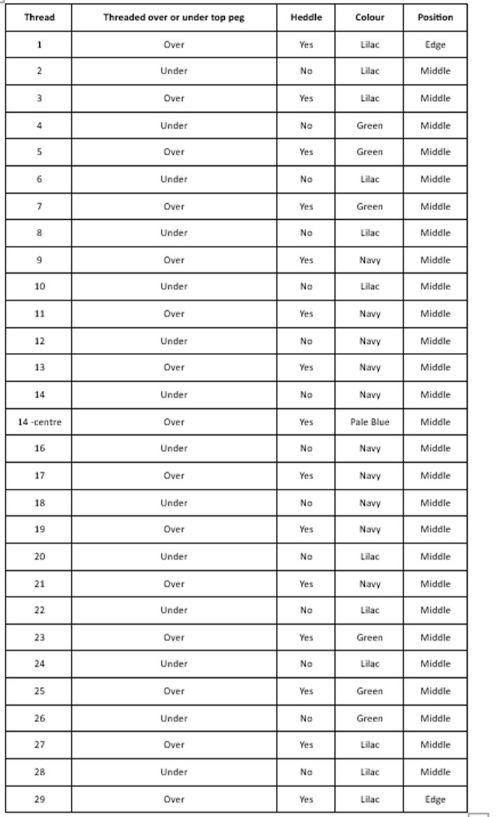
Weave in plain weave, using the purple as the weft colour (the outer colour of the warp threads).
The Final Inkle Woven Band
The final woven band is shown below and has the following dimensions: 2.3cm x 76cm when woven on our TabbyandTweed inkle loom.

What Can You Make with an Inkle Woven Band?
Another blog that we have written is called ’10 beautiful things you can make with an inkle loom’ and shows the reader a range of items that can be easily made using an inkle loom woven band or braid. The decorative bag charm shown below is an example.

Inkle Loom Weaving is perfect for beginners.
Inkle weaving is suitable for beginners and like any craft takes time to learn and develop the weaving technique. The over-under rhythm of the weave is easy to learn and satisfying from the first few rows.
Details of all our weaving kits are available in our TabbyandTweed website shop for UK, USA, Canada and New Zealand delivery.
If you are interested in keeping up to date with our weaving work then do sign up to receive our newsletter by clicking the link here.

